
Off-Grid Solar Power & Energy Systems for Developments
We engineer and install commercial-grade hybrid solar microgrids and passive thermal systems to guarantee 100% utility autonomy for masterplanned estates and commercial projects.
Solar Power Installations
Deploying high-efficiency solar networks configured to run off-grid or back up unstable municipal connections.
Solar Array & Management
High-efficiency monocrystalline PV panels sourced via Cape Solar, optimized for high ambient temperature power output.
- Sunsynk Inverters: Smart hybrid inverters that route energy dynamically between panels, battery storage, and loads.
- Accessories: Weatherproof combiners, breakers, protectors, and tracks.
Lithium Battery Storage
Lithium Iron Phosphate (LiFePO4) storage banks engineered for high safety margin in hot African climates with zero gas venting requirements.
Specifications: 6,000+ charge cycles, 95%+ round-trip efficiency, integrated BMS, and zero thermal runaway risk.
Eco-Benefits & Grid Autonomy
Zero Blackout Vulnerability
Complete isolation from grid outages or local load shedding programs.
10-Year Battery Lifespan
LiFePO4 chemistry outlasts standard lead-acid packs by up to 5x, eliminating frequent replacements.
Safe Chemical Profile
High stability in hot climates with zero gas venting requirements.
Optimized Management
Smart inverter programming limits grid draw to emergency-only, maximizing solar utilization.
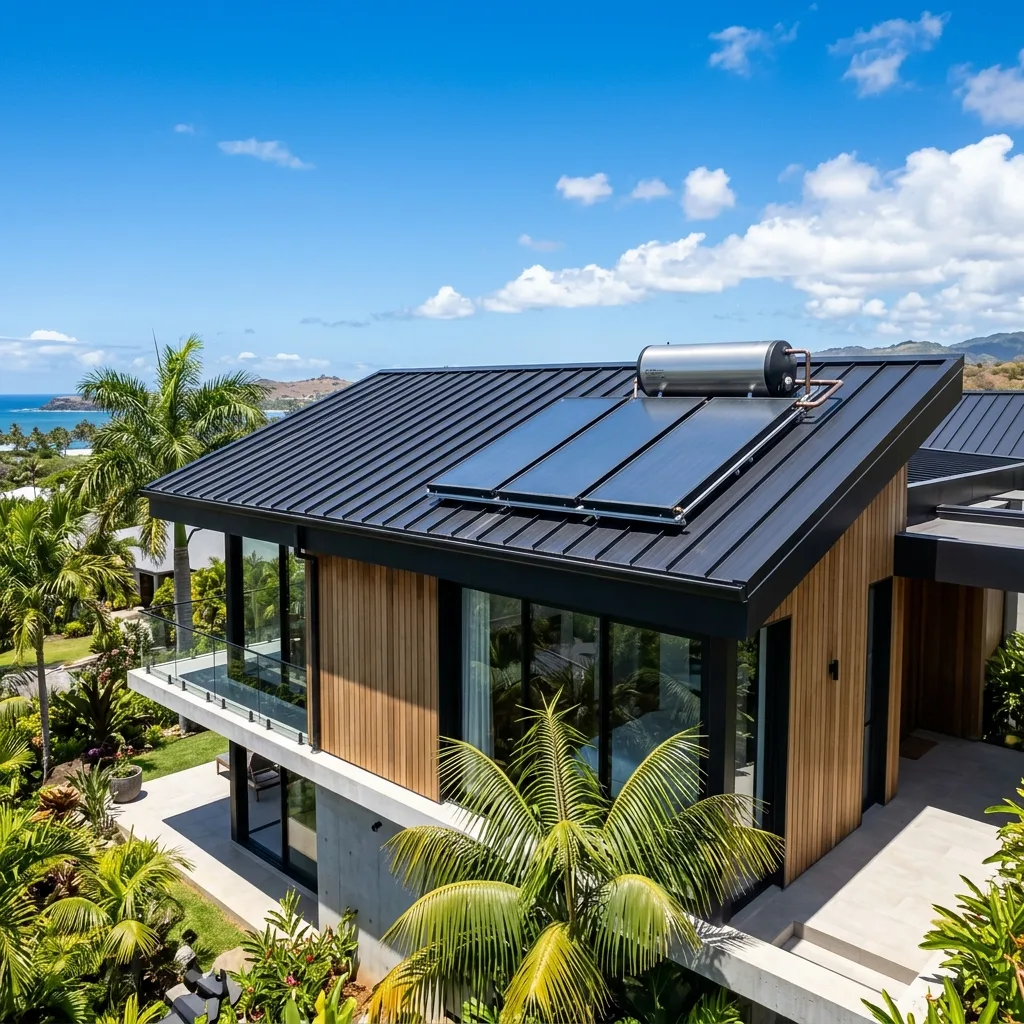
Solar Hot Water & Solar-Ready Audits
Integrating thermal hot water systems and building pathway routing directly during raw structural foundation pours.
Solar Hot Water Geysers
Specialized installation of solar geyser thermosiphon systems for residential and commercial scale applications, sourced via Cape Solar distribution networks.
Solar-Ready Provisions
Pre-installing infrastructure during concrete and masonry phases of new builds to prevent structural boring rework later.
- Conduits: Roof cavities routed directly to battery areas.
- Mounting: Heavy anchor bolts cast into roof slabs.
- Battery Rooms: Ventilated, dust-sealed ground floor spaces.
Structural Advantages
70% Lower Heating Costs
Direct thermal collection is significantly more efficient than using electrical resistance elements.
Lower Construction Rework
Pre-planning conduit lines prevents boring holes into finished concrete slabs or core brick walls later.
Optimized Structural Load
Hot water storage locations are calculated during design phases to match column weight parameters.
Property Appreciation
Integrated solar-ready conduit pathways increase long-term asset value for estate buyers.
Passive Cooling Architecture
Using thermodynamic design elements to reduce interior structural temperatures naturally without active air-conditioning.
Passive Ventilation & Overhangs
Aligning open windows and vents along prevailing coastal wind corridors, and deploying deep roof overhangs to block hot midday solar radiation.
- Reflective Roofing: High-albedo metal roofs that deflect heat radiation back into the atmosphere.
Shading Screens & Courtyards
Utilizing woven bamboo and raffia sliding panels that block direct solar glare while letting air pass freely.
- Thermal Mass Walls: Rammed earth and CEB walls that absorb daytime heat.
- Courtyard Designs: Open-air courtyards that draw cool air up.
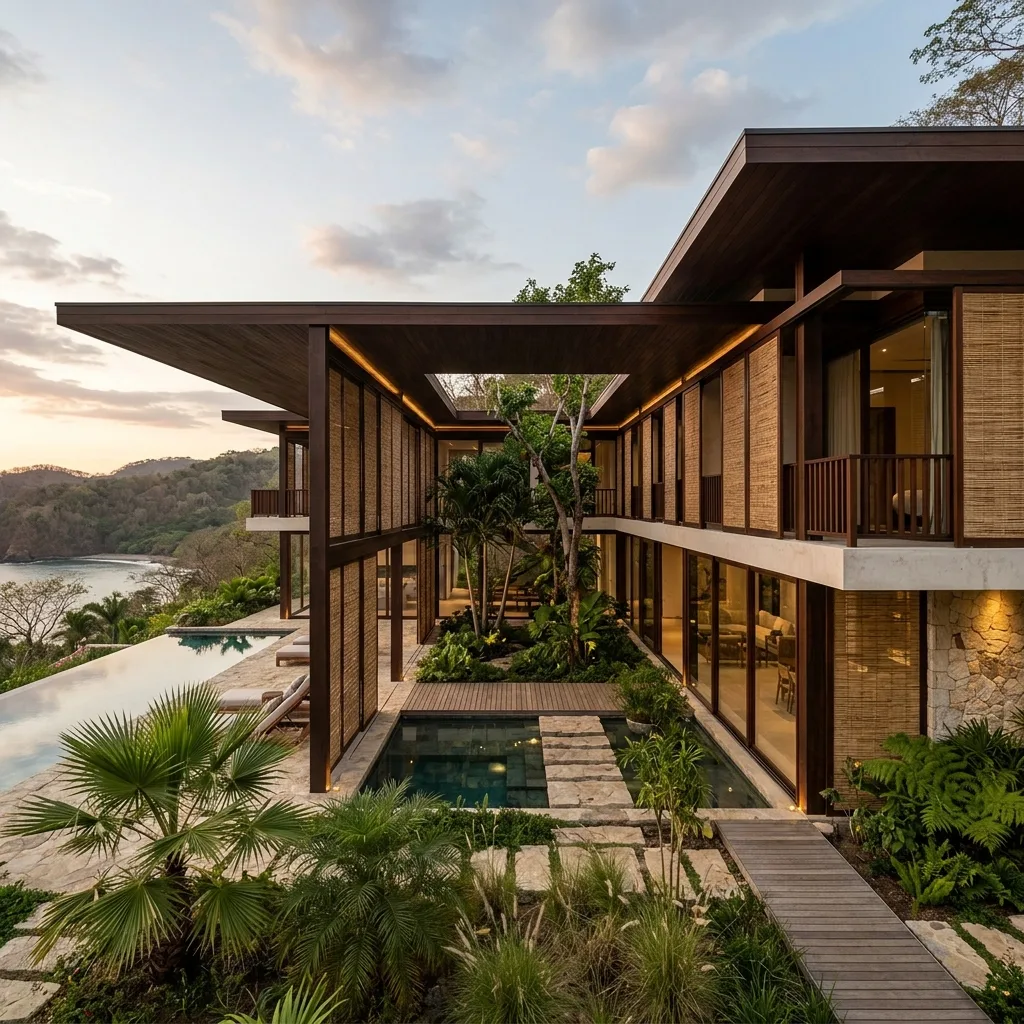
Thermodynamic Design Benefits
Thermal Isolation
Structural elements maintain cooler ambient temperatures without active air-conditioning.
Eliminate HVAC Dependency
Reduced dependency on mechanical fans and compressors, preserving backup battery capacity.
Healthy Living Spaces
Fresh air cross-flows replace stagnant air, creating comfortable indoor breathing spaces.
Lower Operating Cost
Eliminating heavy air conditioning saves thousands in monthly diesel or power bills.